Six months after a founder handed the chief executive’s job to the man he had picked and moved to the chair, I walked into his company’s dispatch office a little before six in the morning. Two dispatchers, a radio, a coffee maker older than either of them, and on the wall beside the window a laminated sheet headed After Hours Call List. The first name on it was the founder’s. The new chief executive was third, below the operations manager.
Nobody meant anything by it. The sheet had been printed years before and nobody had thought to print another. But the dispatchers used it every night, and so for six months every truck in a bar ditch and every operator angry at two in the morning had gone to the chairman first.
The sheet by the window
A call list is about the least governed document in a service company. No board approves it and no lender asks for it. It records something the organization chart only claims, which is who actually decides at the moment things go wrong. When I want to know whether a transition has happened, I read that sheet before I read the minutes. The single line I look at is the first name.
What the chair actually holds
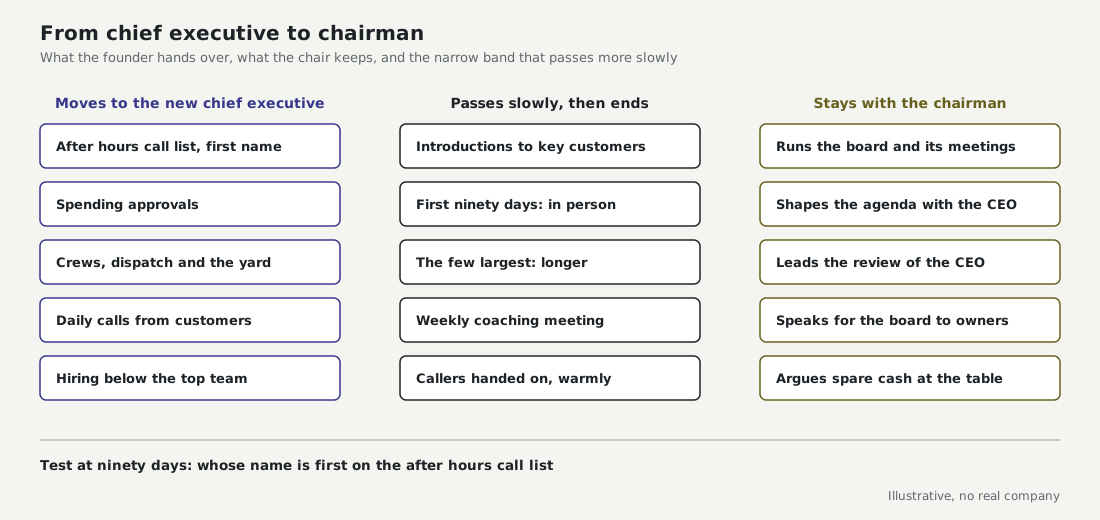
The formal job of a chairman is narrow. He runs the board and its meetings, shapes the agenda with the chief executive, leads the board’s review of how the chief executive is doing, and speaks for the board to shareholders and lenders. Nothing in that list touches a crew, a customer or a truck. A founder has spent twenty or thirty years doing the opposite, and the list reads to him like a demotion dressed as an honor.
Why the founder has the hardest time
Almost everyone else who becomes chairman arrives from outside the building. The founder arrives from the corner office, with every relationship in the company still wired through him. Company men have his cell number. Supervisors check with him out of habit. He takes each call as a kindness, and it usually is one, which is exactly why it does harm.
This industry was built by such men. As late as 1905, the Handbook of Texas notes, Texas oil was still the province of small producers.1 Plenty of service companies in this state still carry the founder’s name on the gate, and in those companies the founder’s name on the call list is the default, never a decision.
The rule I apply
My rule, which many sensible directors think too harsh, is that within ninety days of the handover the founder’s name should come off the call list, off every spending approval, and off the door of any office in the yard. He should keep an office, but in a different building.
The case against is strong. The founder’s customer relationships may be the company’s most valuable asset, and sending him away wastes them. He can coach a new chief executive through his first year in a way no director can, and coaching happens best in the hallway. Where growth equity came in partly to back the founder himself, some investors would call my rule a waste of the thing they paid for.
My answer is that coaching belongs in a standing weekly meeting and relationships belong in a planned sequence of introductions, with the founder taking the chief executive to see each important customer in person within the first ninety days. After that, when a customer calls the founder, he answers warmly and hands the call on. The chair has its own real work to do. The biggest decision left to a founder chairman is how the company spends its spare cash, and he should argue it at the board table, the question I take up in the essay on paying down debt or buying the truck, rather than on the phone to the yard. He is also usually the only person who can explain the company’s old books, which matters if the first real audit arrives during the transition, one reason I urge that an audit come well before it is needed.
Where it went wrong
I pressed one founder to step back on exactly that schedule. He did, gracefully, and moved across town. Four months later a large customer brought in a new head of procurement who wanted to reprice the whole contract. The new chief executive handled the meeting badly, the founder had been told to stay out and stayed out, and the company lost a sizable share of that customer’s work. The founder had known the customer for twenty years. One lunch from him might have saved it. My rule cost that company real business, and I now hold that the few relationships that carry the most weight should pass more slowly than everything else.
The limit
I came to boards from finance, a path laid out on the about page, and I have learned to distrust rules that sound clean. I read older company histories with this handover in mind, the Dallas ones in what the city built with oil money among them, and it recurs across my other energy essays.
The rule stands, with its edge marked. The founder leaves the call list, the approval chain and the building in ninety days, and he stays, for as long as it takes, inside the few relationships no one else in the company can yet carry.
References
-
Texas State Historical Association, Handbook of Texas, Oil and Gas Industry ↩