
Essays · 10
The archive
Official directory of Corsicana, Texas, for 1889. Library of Congress. Public domain.
Every piece of Texas history rests on records someone made for a reason that had nothing to do with history: a tax roll, a voter list, a land office map, a photograph with a caption added decades later. These ten essays are about the records themselves, what each kind was made for, and what it can and cannot prove.
Many of those records are now a search away. A vast collection of digitized Texas newspapers, maps and documents is described in the entry on the Portal to Texas History.1 The state’s own government records, including the original of the Travis letter, are held by the institution in the entry on the Texas State Library and Archives Commission. The encyclopedia most researchers start from, the Handbook of Texas, is published by the organization in the entry on the Texas State Historical Association.
Each essay takes one kind of record and asks three questions of it: who made it, what it was made to do, and what a researcher can and cannot claim from it. The answers are rarely flattering to the record. Directories leave people out, captions guess, maps argue and registers reflect whoever kept them. Knowing how a record fails is what makes it useful, and the essays are as interested in the failures as in the finds.
The method here is the one behind the biography of Governor Coke, which is described on the books page. The period that method was first used on is the subject of the essays on Reconstruction Texas.
References
-
The Portal to Texas History, University of North Texas Libraries, about the Portal. ↩
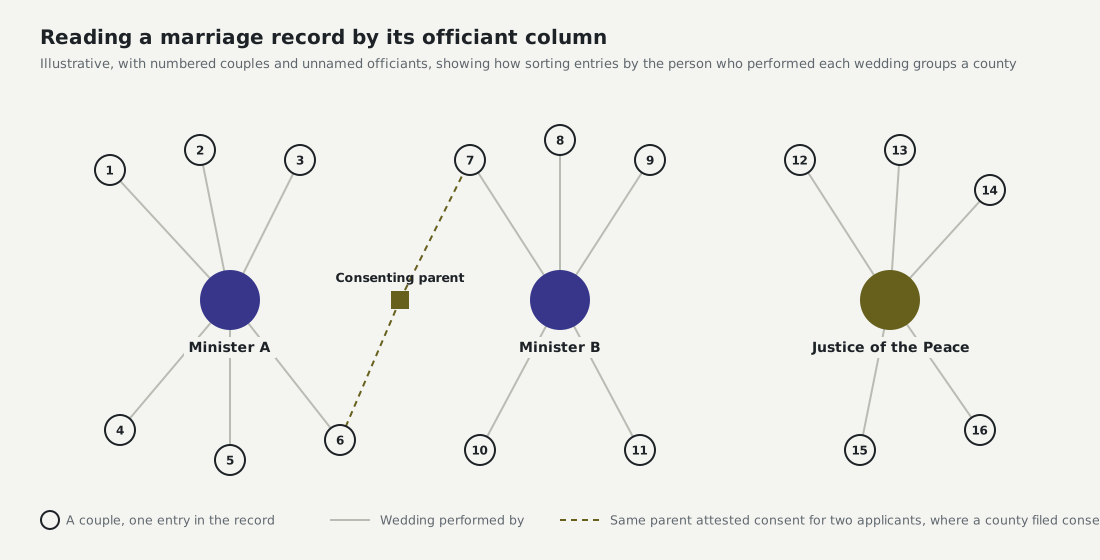 County Marriage Books as Social Maps
Why the officiant column of a Texas county marriage record is worth reading before the couples, and the four ways that reading goes wrong.
6 min read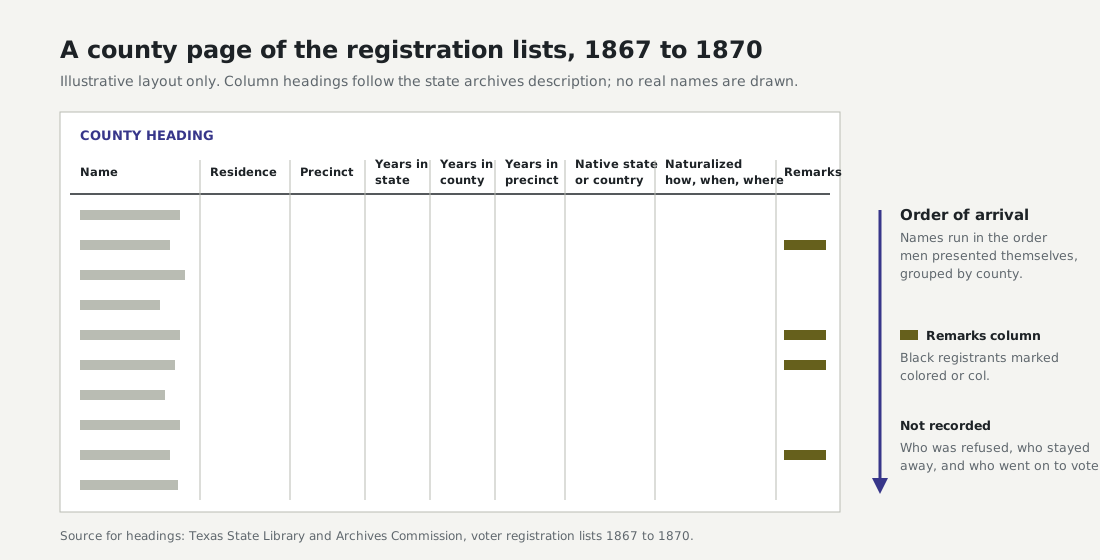 The Voter Registration Lists of 1867
How the county ledgers of 1867 to 1870 help settle whether white Texans were kept off the rolls or simply chose not to vote.
4 min read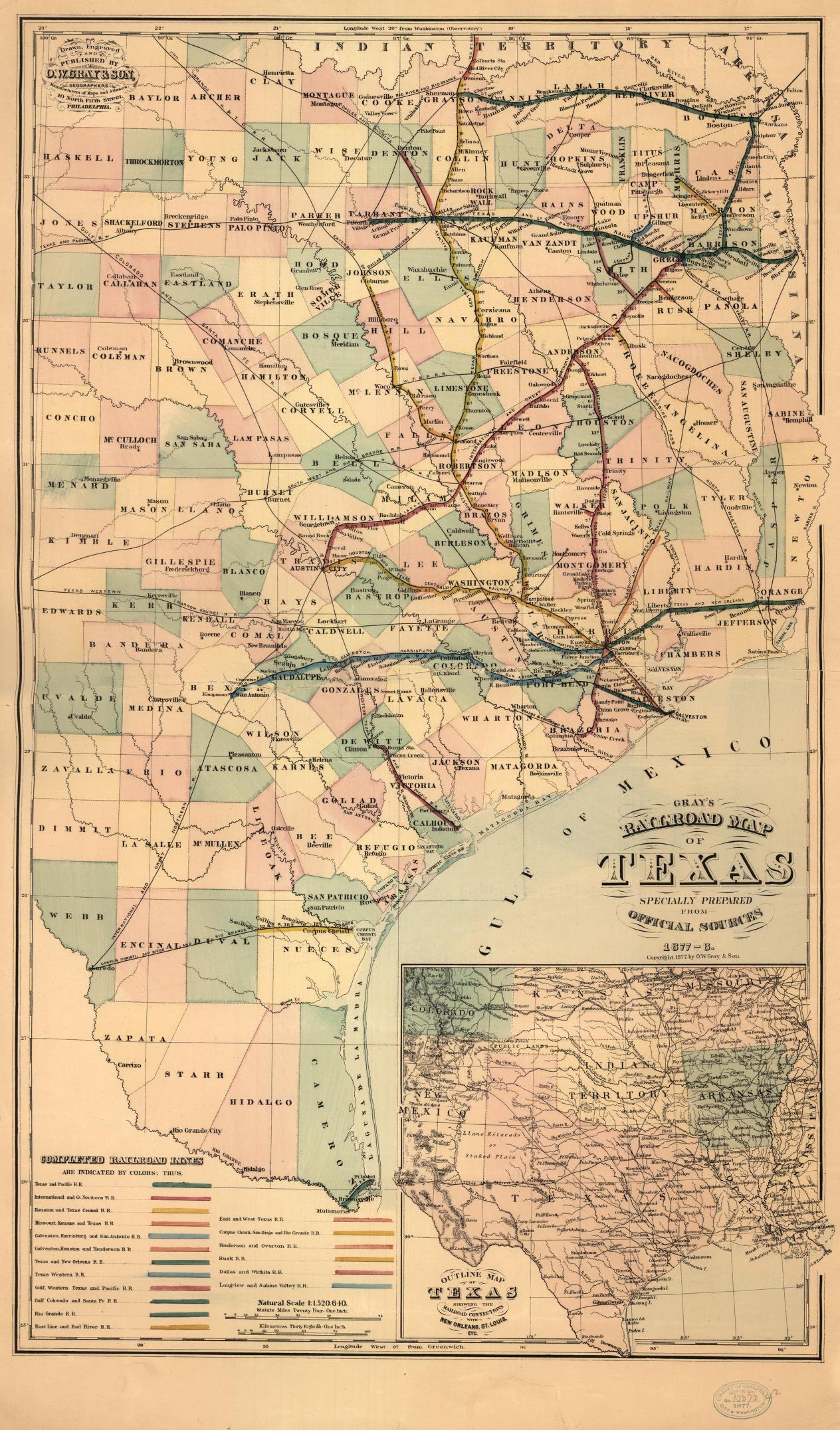 A Land Office Map Makes an Argument
Setting a commercial railroad map of 1877 beside the land office county maps to see what each was drawn to persuade its reader of.
6 min read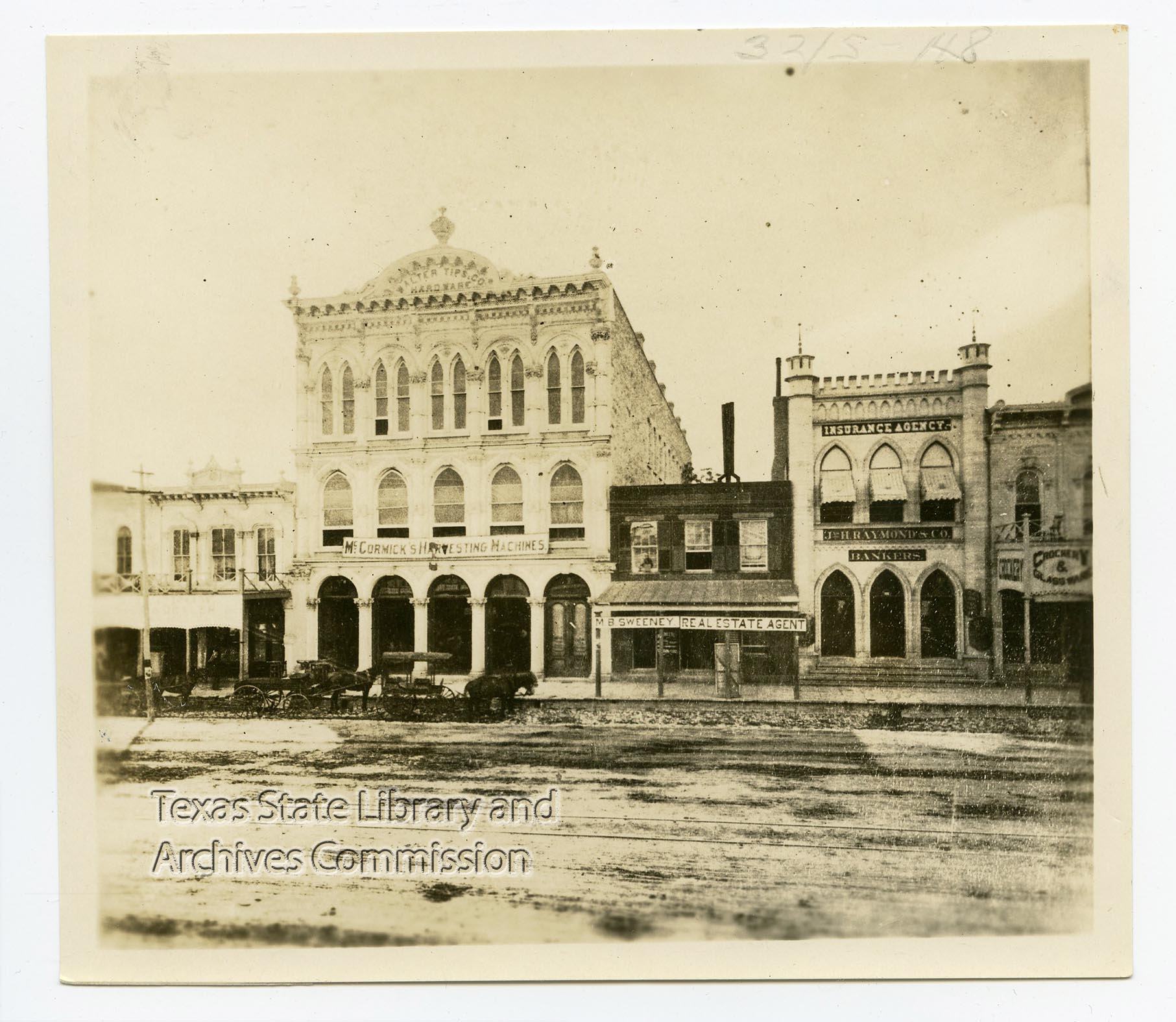 A Photograph Is Evidence With a Caption
Dating a Congress Avenue street view credited to S.B. Hill by testing each number in its caption against what the frame itself can show.
4 min read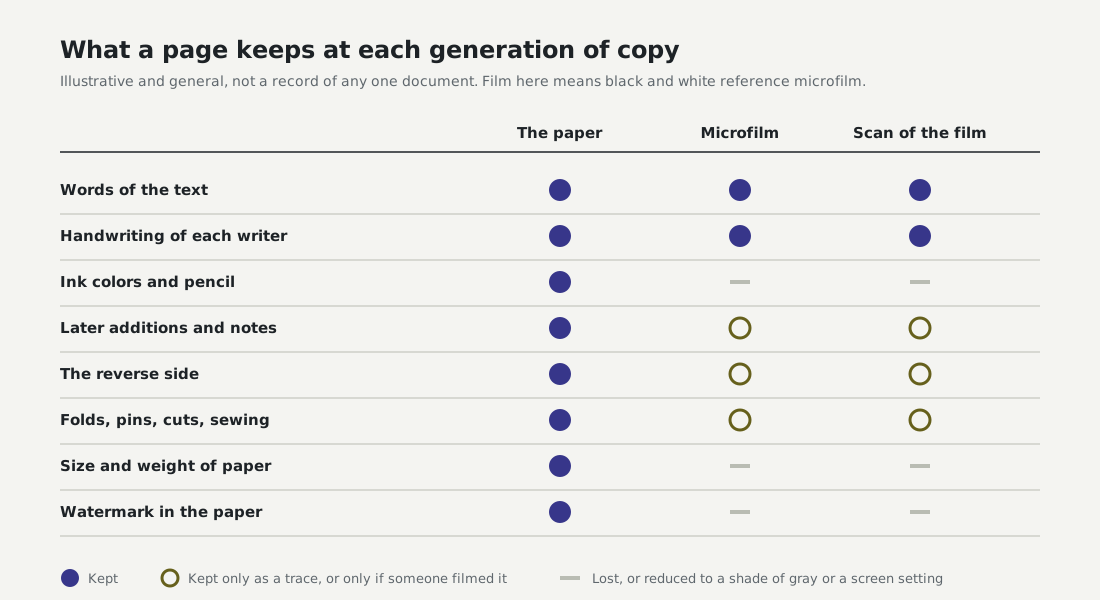 What a Digitized Page Loses
The Travis letter of February 1836 and the voter ledgers of 1867 as a test of what survives the trip from paper to film to screen.
6 min read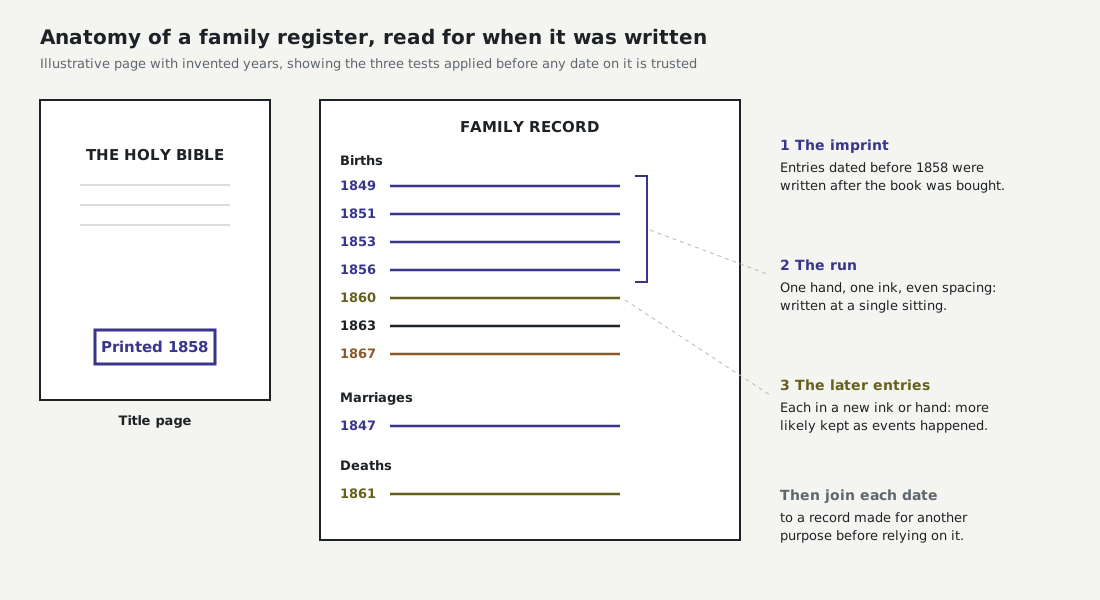 Family Bibles and Private Registers
A working method for dating the entries in a family register by imprint, hand and ink before trusting any date written in it.
4 min read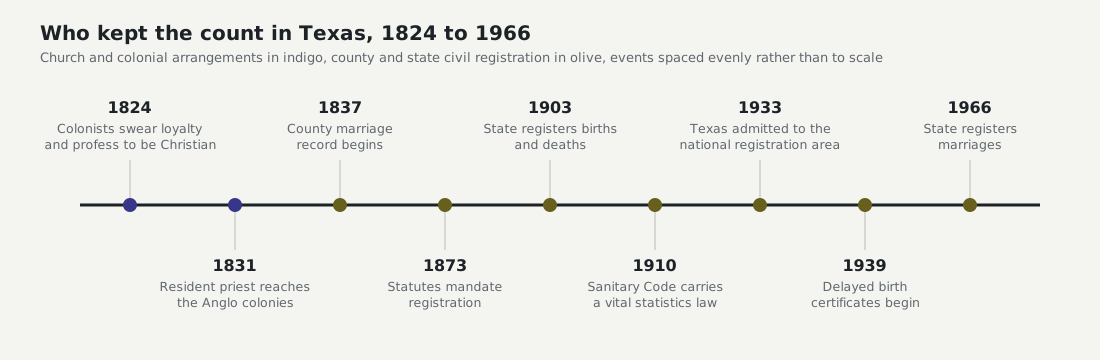 Church Records Before the State Kept Count
What a baptism entry proves and what it cannot, read against the slow arrival of state birth registration between 1873 and the 1930s.
6 min read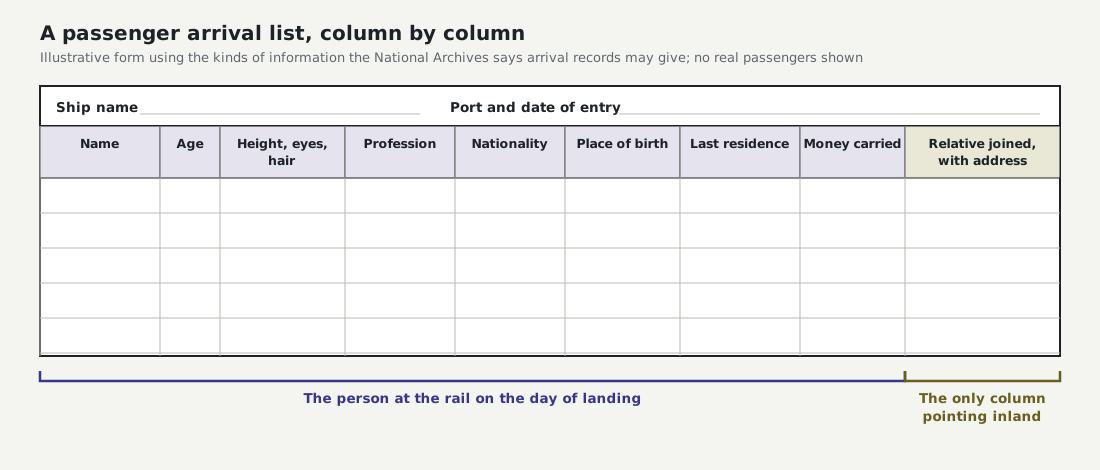 Galveston Passenger Lists and Who Arrived
Why a Galveston manifest is a record of the voyage rather than of settlement, and where to look first for a family that came some other way.
4 min read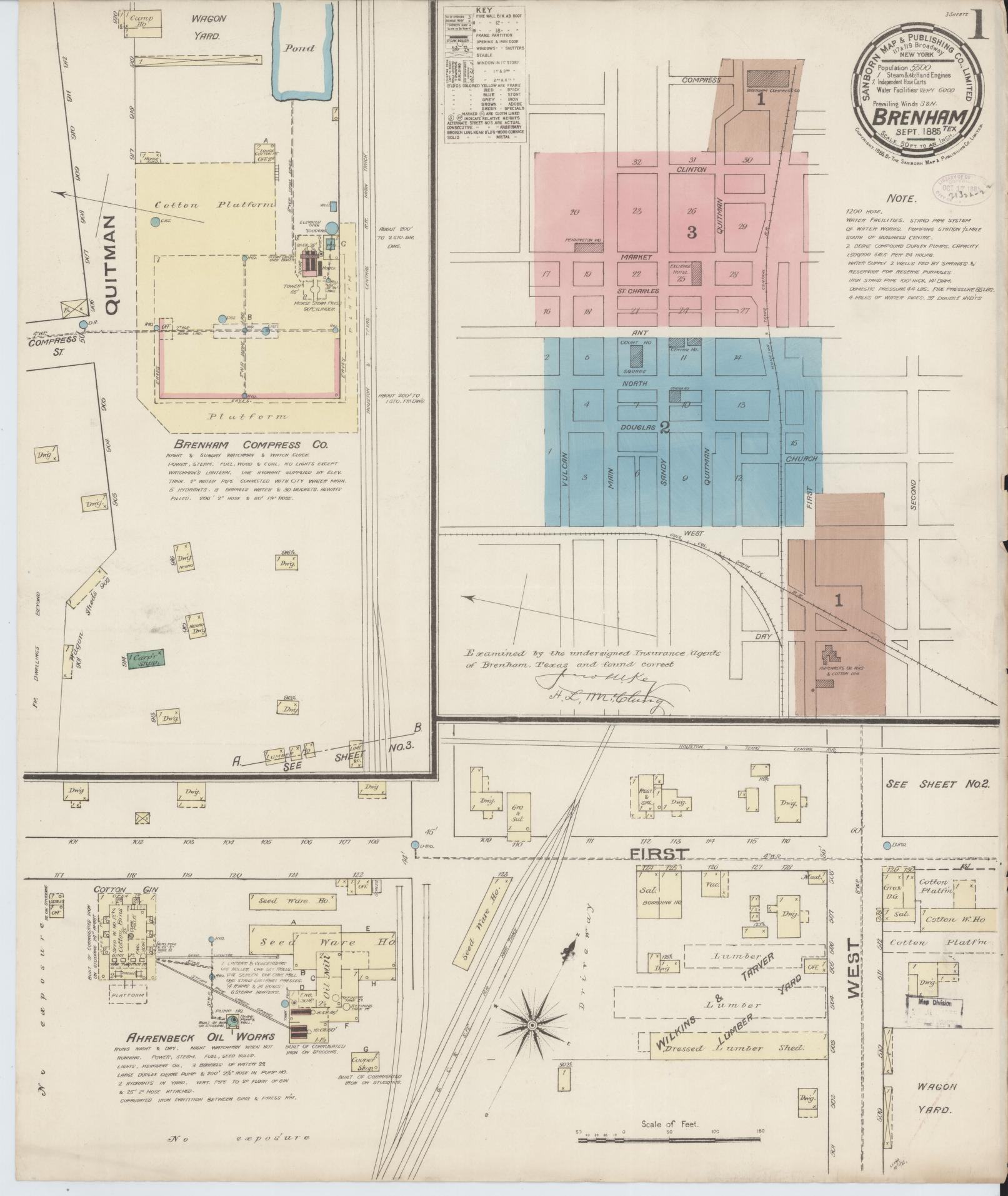 Sanborn Maps Show a Town Building by Building
Reading the Sanborn sheets of Brenham from 1885 to 1920 against the census, and what the map type records and leaves off as a class of evidence.
5 min read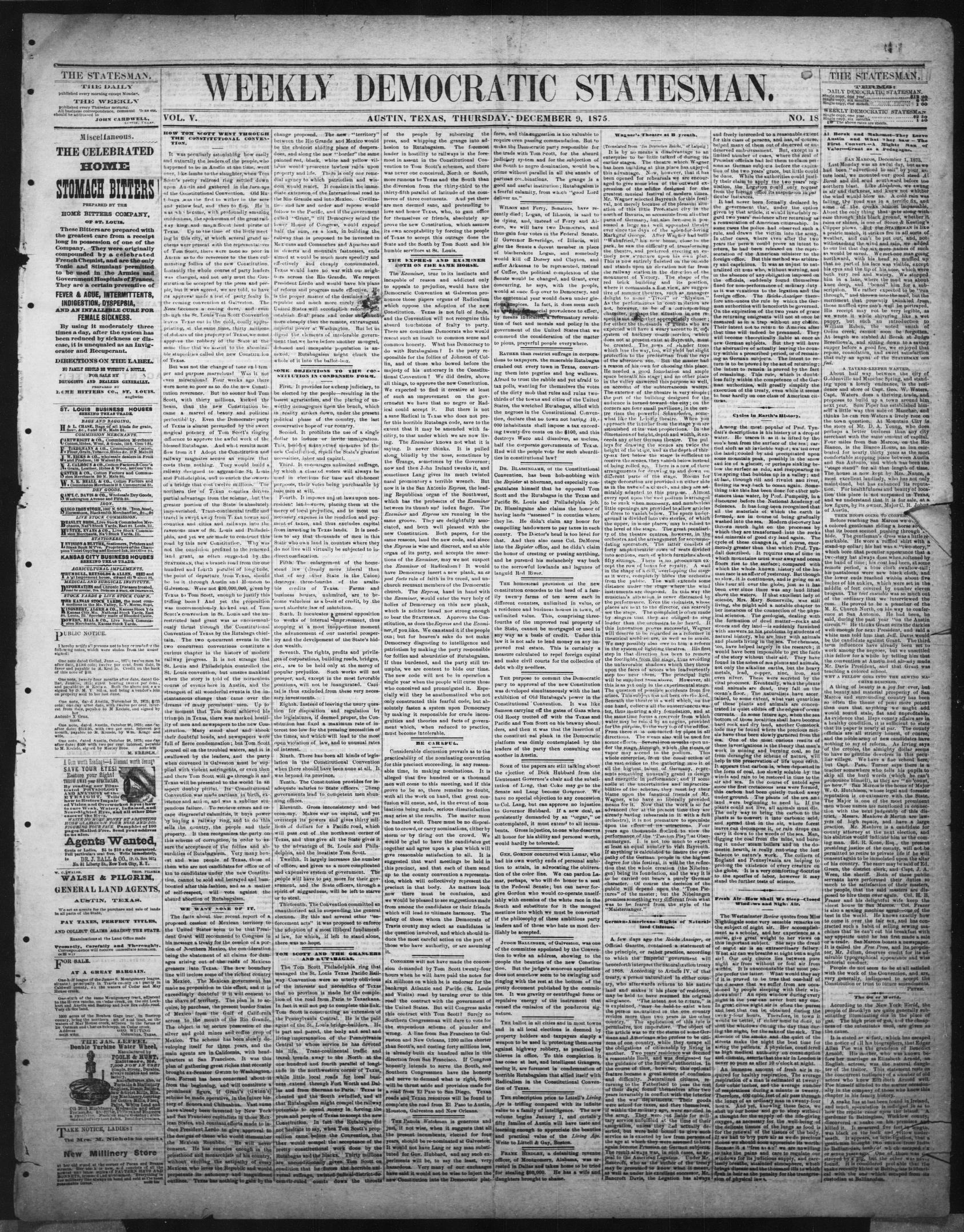 Advertisements Are Economic Data
The front page advertisements of an Austin weekly for December 9, 1875, read for interest rates, trade routes and the dates hidden in insertion codes.
4 min read