The mistake I made began with a slide carrying three logos. Some years ago I supported a plan to combine three small service companies working the same basin into one. Each had somewhere between sixty and ninety people, its own yard, a handful of operators who called it first, and an owner who knew every driver by his first name. The slide showed the three logos sliding together into a fourth, and beneath them a column of savings: one insurance program, one accounting department, one purchasing desk, one safety manager in place of three, and a sales effort that would offer each company’s services to the other two companies’ customers.
Most of the savings showed up. The new sales never did, and I have spent a good while since working out why.
Before I explain, the case for consolidation should be put at its full strength, because the directors who make it are capable people and on some days they are right. Small service companies are fragile in ways that size cures. They buy fuel, tires and insurance at retail prices. They cannot carry a real controller, a real safety program or a proper audit. Many depend on two or three operators who could drop them with one call. Operators, meanwhile, prefer vendors large enough to work several basins, carry high insurance limits and pass a long prequalification questionnaire, and a company of seventy people struggles to clear that bar. Put three together and the result can clear it. Overhead falls, purchasing improves, lenders see a bigger borrower with more collateral, and a buyer some years later sees a platform instead of a shop. Each of those claims can be true, and in my case most of them were.
Where I went wrong was the one line on the slide that could not be tested until after closing, the cross selling. The plan assumed that an operator who used the first company for one service would happily use the second for another once they shared an owner. The operators had chosen three different small vendors deliberately. A company man who spreads work across several vendors keeps each of them sharp on price and keeps a second number to call when the first crew runs late. When the three became one, several operators did that arithmetic from their side, saw one vendor where there had been three, and moved some of their work to a fourth outfit none of us had heard of. The combination had narrowed its customers’ choices, and the customers widened them again at our expense.
The second thing the slide missed was hidden inside the phrase duplicate functions. It listed three dispatch operations as one cost counted three times. They were three separate sets of knowledge about three sets of customers: which location wanted the crew before daylight, which superintendent expected a call before a truck left the yard, which pad could not take a heavy load after rain. The savings column recorded that knowledge as redundancy. Merging it cost more than the column saved, and the cost came in the form of work that quietly went elsewhere.
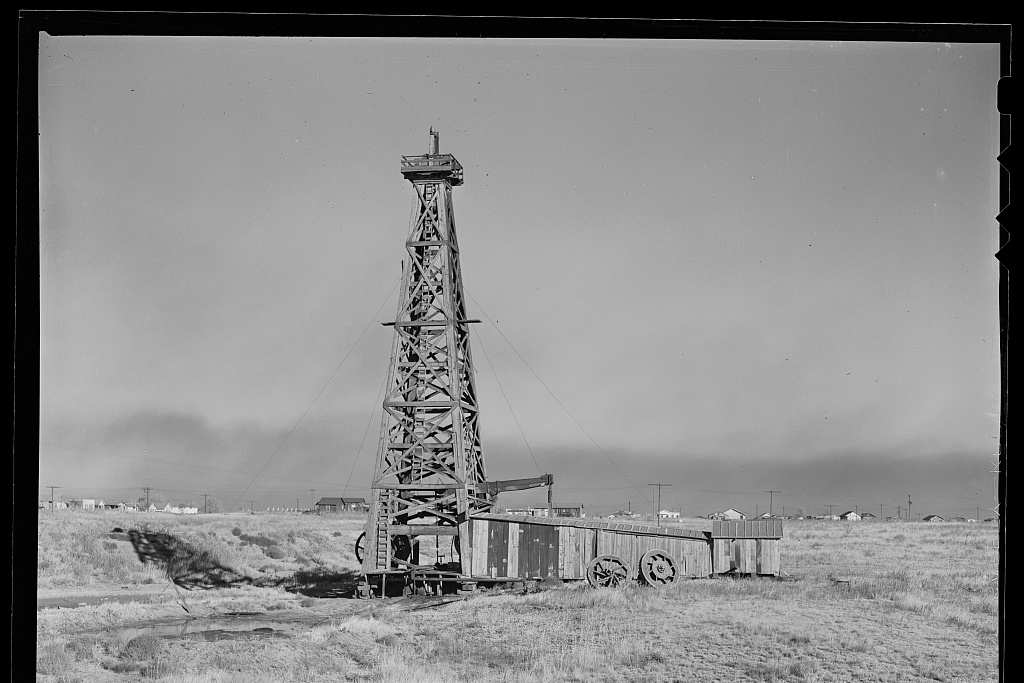
This industry has argued about scale before, in a different form. When the East Texas field came in during 1930, it had, in the Handbook of Texas’s words, no plan and no governor, and it was drilled up by hundreds of small operators rather than developed to an orderly plan by one or a few companies, as some earlier Texas fields had been.1 The early years were ruinous. Yet the field’s eventual repair did not come from combining its owners. As late as 1938 the independents held more than twice as many leases there as the major companies, and the operators had started a pressure maintenance program, reinjecting produced salt water to slow the fall in reservoir pressure.1 Many owners stayed many owners and agreed on the one thing that had to be shared. The entry on the East Texas oil field tells that history at length, and the city’s banks come into it too, as the Dallas history piece on oil money describes. The pattern persists at the scale of the whole country, where most companies producing crude are independent producers, usually operating only in the United States.2
So here is where I have landed, and a director who runs roll ups for a living would fight me on it. I think a combination of small oilfield services companies should merge what the customer never sees and leave alone, for much longer than the model assumes and possibly for good, what the customer does see. Insurance, purchasing, accounting, safety training and the banking relationship can go together in the first year. The names on the trucks, the dispatch desks, the field supervisors and the person who answers the phone before dawn should stay where they were.
The objection is sharp. Back office savings are modest, the argument runs, and the real prize in a combination is utilization: moving an idle crew from one yard onto the other yard’s work, pooling spare equipment, bidding larger jobs than any of the three could win alone. A holding company of three separately branded shops is not a platform, and no buyer will pay for one as if it were. I accept most of that. Pooled equipment is a genuine gain. My experience is only that crews travel less willingly than trucks, and that every utilization estimate I have seen assumed the customers kept their share after the combination, which is the assumption that failed me.
The narrower combination has its own weak points, and I should not pretend otherwise. The back office it does merge still has to be joined. Three fleets come with three equipment lenders, three sets of appraisals and three lien files, and sorting out whose collateral secures what is a slow business, as I set out in the essay on how equipment lenders read a fleet. Merged books also bring the first real audit with them, usually before any of the three companies was ready for one, which is part of my case for commissioning that audit a year ahead of need. And there are customers who truly want one vendor. I have watched a combination built my way lose a large bid to a fully integrated competitor because the operator’s procurement group would not sign three master service agreements with three sister companies. That job was real, and we did not get it.
I still support combinations, in my own board work and in principle. I support fewer of them, and smaller ones, and I read the savings column differently. Where a line says duplicate, I ask who the duplicate talks to and whether that person will still talk to us after the merger. More of that line of thinking runs through the other essays on energy companies.
Merge the ledgers, the policies and the purchasing; leave the dispatch desks, the supervisors and the names on the doors alone until the customers themselves ask for one company.
References
-
Texas State Historical Association, Handbook of Texas, The East Texas Oilfield: A Historical Overview of America’s Largest Oil Reservoir ↩ ↩2
-
U.S. Energy Information Administration, Oil and petroleum products explained: where our oil comes from ↩