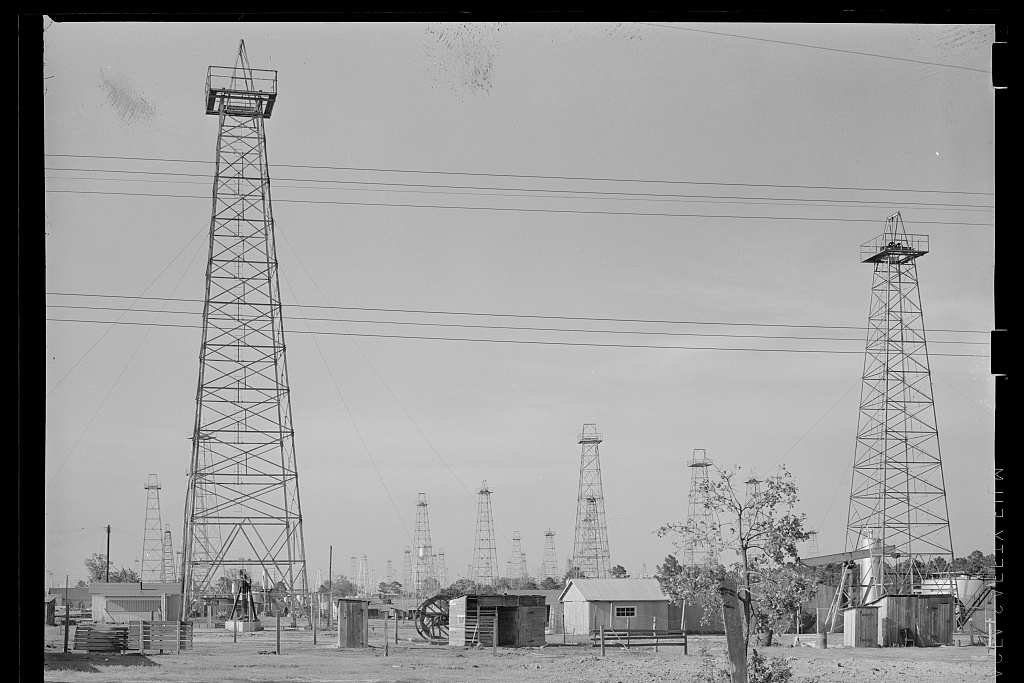
In 1987, when I went to work as an analyst in corporate finance at Goldman Sachs in New York, the number that described the Texas oil business was a count of drilling rigs. In the year just ended it had fallen by more than half, from 677 to 311, and crude had traded as low as $7 a barrel.1 By 1989, the last of my analyst years, the count stood at 206, about one sixth of the record set eight years earlier.1 Between 1987 and 1990, seven of the ten largest commercial banks in Texas failed.2
I learned energy investment banking with that number sitting under everything I did. The rig count is a simple figure. It says how many rigs are turning to the right on a given week. What it took me years to understand is what kind of figure it is.
A rig on location is the end of a long chain of decisions. Somebody leased the acreage, a geologist argued for the prospect, a committee approved the budget, the operator contracted the rig and scheduled the crews. By the time the rig shows up in the count, most of the money that will be spent on that well has already been committed. So the count is mostly a record of decisions made months earlier, in a different mood, at a different price. Reading it as a forecast of what comes next is like reading last quarter’s minutes to find out what the board will decide tomorrow.
The Energy Information Administration puts the underlying reason plainly. In the short run, oil production capacity and the equipment that burns petroleum are both fairly fixed, and new supply takes time to develop, so it can take a large swing in price to bring supply and demand back into balance.3 That slowness is why the count overshoots in both directions. Operators keep drilling into a falling market because the rigs were already contracted, and they keep waiting in a rising one because the next budget has not been approved.
None of this was new, which was the second lesson. The history of Texas oil is a history of people acting on a count of wells. At Spindletop, output reached seventeen and a half million barrels in 1902, and within two years the field was making barely ten thousand barrels a day, drained by more wells than it could carry.4 Everyone standing in Beaumont in 1902 could see the derricks. Very few could see that the number of derricks was itself the problem.
What I carried out of those years is a rule about my own timing, and it is one that serious investors dispute. I do not try to time the commodity cycle when I decide whether to back a company. I try to time the company. The question I ask is whether this business, with this management, is ready to put outside capital to work now: whether it has more good work than it can take on, and a clear use for the money that relieves one real constraint. If it is, I would rather say yes in a poor year than wait for a better one. If it is not, a strong year will not make it ready.
The opposing case is strong, and I have heard it from people I respect. They say the entry point in the cycle decides most of what happens afterward, that capital put into oilfield service companies through growth equity near a peak will spend years working off equipment bought at the wrong price, and that a disciplined investor should simply stop writing checks when activity is running hot. They are partly right. Equipment ordered at the top of a cycle is expensive for a long time.
Where I part company with them is on what a person can actually know. The rig count tells you where the cycle has been. It does not tell you when it will turn, and I have watched a great many clever people wait for a turn that came a year later than they expected, or two years earlier. A company that is ready is a fact you can check. The top of a cycle is only visible afterward.
My rule breaks, and I have seen it break. There have been times when I trusted a company’s readiness and underweighted a market that was plainly overheated, and the company spent the following year absorbing costs it had taken on at the worst moment. There have also been times when I did the opposite, held back because the cycle looked stretched, and watched a good business find its capital elsewhere. I have not found a way to weigh those two mistakes against each other that I fully trust. What I have found is that the second kind feels safer at the time and teaches less.
Timing in this sense also governs how a deal is written, which is why I care so much about what gets settled early, a subject I take up in the essay on how terms harden at the letter of intent. The decade after the analyst years, spent finding money for privately owned energy companies and then putting my own judgment behind some of them, is described on my career page, and the energy writing as a whole sits on the hub for these essays. The older story of how oil money shaped this city, told in an account of how oil wealth reshaped Dallas, is full of the same pattern of people reading the count too late or too early.
I still keep the rig count in front of me. It was the first number the business taught me, and after more than 35 years it remains a fair summary of what the industry decided a season ago. What the count cannot tell me, and what no series of numbers from 1987 could have told me then, is which of the companies still drilling that spring would be standing when the count came back.
References
-
Texas State Historical Association, Handbook of Texas, Oil and Gas Industry ↩ ↩2
-
Texas State Historical Association, Handbook of Texas, Banks and Banking ↩
-
U.S. Energy Information Administration, Oil prices and outlook ↩
-
Texas State Historical Association, Handbook of Texas, Spindletop Oilfield ↩